
If you're a contractor, you already know the truth: how to get more contractor leads is the question that decides whether you grow or stall this year.
The old playbook — referrals, word-of-mouth, a Yellow Pages listing — doesn't fill a calendar anymore. Homeowners search Google. They scroll Instagram. They check reviews. Contractor lead generation in 2026 is a system, not luck.
This guide breaks down the seven proven construction lead generation strategies winning right now: Google Local Search, social media content, lead-generating websites, paid ads, referral programs, partnerships, and content marketing. Each one with effort vs. ROI, real examples, and what to do this week.
By the end, you'll have a clear playbook for how to generate leads as a contractor — without depending on whether your last client remembers to recommend you.
The Problem: Most Contractors Have No Lead Generation System
Most contractors are busy when they're busy and slow when they're slow. That feast-or-famine cycle isn't a market problem — it's a system problem. When work dries up, they start scrambling: posting sporadically on Facebook, checking Angi for leads, or waiting for the phone to ring. None of those are systems. They're reactions.
A contractor lead generation system works even when you're on-site with your hands full. It creates a predictable flow of inbound inquiries through channels that run independently of your day-to-day attention. The contractors who break through $1M+ in annual revenue almost universally have this in place — not because they're better at the work, but because they never stop marketing even when they're booked out.
The other core problem: most contractors rely on a single source. That source is usually referrals. Referrals are high quality, but they're unpredictable and non-scalable. When you need to grow headcount, buy new equipment, or push into a new service area, referrals won't get you there fast enough. You need channels you can dial up deliberately — and that means building the system we're about to break down.
The seven strategies in this guide work together as a stack. You don't need all seven running at once to start. Pick two or three that match your current capacity and build from there. But understand that the contractors cleaning up in 2026 are running most of this stack simultaneously, compounding their visibility across every touchpoint a homeowner or commercial buyer uses before they pick up the phone.
Strategy #1: Google Local Search Optimization for Contractor Lead Generation
Google Local Search — specifically Google Business Profile (formerly Google My Business) — is the single highest-ROI free channel available to contractors today. When someone types "roofing contractor near me" or "general contractor [city]", the map pack that appears above organic results drives the majority of clicks. If you're not in that pack, you're invisible to the highest-intent buyers in your market.
Getting into the local map pack isn't magic. It comes down to three things: a complete and accurate Google Business Profile, a consistent stream of genuine 5-star reviews, and NAP consistency (Name, Address, Phone) across every directory your business appears in. Start by claiming and fully completing your profile — add every service you offer, upload at least 20 photos of real project work, set your service area correctly, and post weekly updates. Google rewards active profiles with higher placement.
Reviews are the lever that moves the needle fastest. Ask every satisfied client within 24 hours of project completion — not a week later when the moment has passed. The script is simple: "Would you mind leaving us a Google review? It takes about 60 seconds and really helps us. Here's the direct link." Send it via text with the link. Contractors who systematize this process consistently see review counts grow from single digits to 50+ within a year, and local ranking follows. Target a 4.8+ average rating and at least one new review per month per active crew.
Beyond the map pack, local SEO for contractors extends to your website. Build service pages targeting specific location + service combinations: "bathroom remodeling in [city]," "deck builders [neighborhood]," "commercial roofing [county]." Each page should be at least 500 words of original, specific content — not templated copy you bought from a content mill. Google knows the difference, and so do the homeowners who read it before calling.
Strategy #2: Social Media for Contractor Lead Generation
Social media lead generation for contractors works differently than it does for most industries. You're not selling impulse purchases — you're building trust with someone who's about to hand you $15,000, $80,000, or more. That means your social content needs to do one specific job: demonstrate competence and build credibility before someone ever contacts you.
Instagram and Facebook are the primary platforms for residential contractors. TikTok and YouTube Shorts work well for contractors with strong video content and are worth adding once you have a content cadence locked in. The content mix that works: 40% project progress and before/after photos, 25% educational content (tips, process explainers, material walk-throughs), 20% social proof (testimonials, client reactions, reviews), and 15% team/culture content that humanizes your business. Avoid posting only finished project photos — homeowners want to see how you work, not just the outcome.
Consistency matters more than frequency. Two or three quality posts per week, every week, outperforms a burst of daily posts followed by two months of silence. Use a content calendar and batch your content creation — shoot video on-site once a week, edit on Sunday, schedule for the week. The contractors generating consistent social media leads treat content creation like a job site task: it gets done on schedule regardless of what else is happening.
Engagement is part of the algorithm. Reply to every comment and DM within a few hours. When someone asks "how much does a deck like this cost?" in your comments, that's a lead — treat it like one. The contractors who convert followers into clients are the ones who show up in conversations, not just in their feed. Local hashtags, location tags on posts, and Instagram's location stories feature all extend your reach to people in your service area who don't follow you yet.
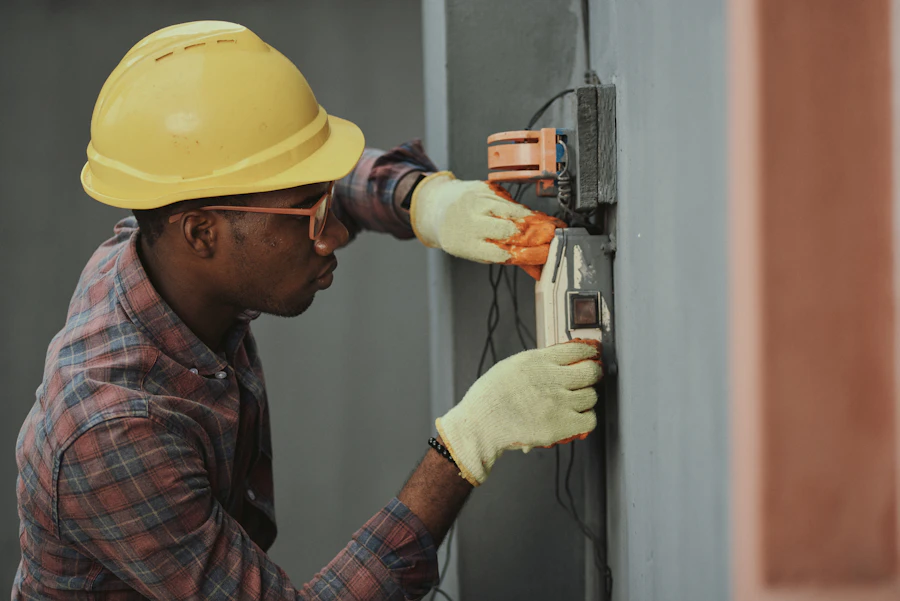
Strategy #3: Websites That Convert — Construction Lead Generation Foundation
Your website is the hub that every other channel feeds into. When someone sees your Instagram post, gets referred by a friend, or finds you in the Google map pack, the next thing they do is visit your website. If that website doesn't convert, every other marketing dollar you spend is partially wasted. A contractor website that generates leads is not a digital brochure — it's a structured sales machine.
The key pages every contractor website needs: a homepage with a clear value proposition and primary call-to-action above the fold, a services page that breaks down each offering individually (not one giant "we do it all" paragraph), a portfolio or project gallery with real photos and brief project descriptions, a reviews page pulling from your Google Business Profile, and a contact page with both a form and a phone number prominently displayed. If you serve multiple cities, individual location pages are essential for local SEO.
Speed and mobile experience are non-negotiable. More than 70% of contractor website traffic in 2026 comes from mobile devices — homeowners searching on their phone during lunch break or while watching TV at night. If your site loads slowly or is hard to navigate on a phone, you're losing leads before they ever contact you. Test your site on a 4G connection. The contact button should be visible without scrolling. The phone number should be tap-to-call. The form should be short — name, phone, project type, and message is enough to start a conversation.
Trust signals matter as much as the design itself. Prominently display your license number, insurance information, years in business, and any industry certifications. Add the logos of associations you belong to (NARI, NAHB, BBB, etc.). Feature real testimonials with first name, last initial, and city — not generic five-star ratings. Include photos of your actual team. The homeowner evaluating your site is asking one question: "Can I trust these people in my home?" Every element of your site should answer yes, with evidence.
Want us to build this system for you? See our contractor marketing services — we handle branding, website, social media, and ads end-to-end.
Strategy #4: Paid Ads for Contractor Lead Generation
Paid advertising for contractors divides into two primary channels: Google Search Ads and Meta (Facebook/Instagram) Ads. They serve different purposes and work best when run together, but each can produce results independently. Google Ads capture demand that already exists — someone actively searching for a contractor right now. Meta Ads create demand by reaching people in your service area who aren't searching yet but will be.
Google Local Services Ads (LSAs) are the best starting point for most contractors because they show above even regular Google Ads, they display your rating and "Google Guaranteed" badge, and you only pay when someone calls or messages — not per click. Getting LSA-verified requires a background check and license verification, but once you're in, the cost per lead is often the lowest of any paid channel. Pair LSAs with standard Google Search Ads targeting high-intent keywords like "contractor [service] [city]" and you cover the entire first page of search results.
Meta Ads work differently but can be highly effective for contractors running larger projects — kitchen and bath remodels, additions, custom homes, commercial builds. The targeting is demographic and interest-based rather than search-intent-based. A well-structured campaign for a remodeling contractor might target homeowners aged 35–65 within a 20-mile radius, with household incomes above $100K, and interests in home improvement. Creative matters enormously on Meta — before/after videos, time-lapse project content, and client testimonial clips consistently outperform static photos. Budget at least $1,000/month on Meta to get reliable data and results.
The mistake most contractors make with paid ads is treating them as a one-time experiment rather than an optimized channel. Contractor pay-per-click advertising requires ongoing management: testing headlines and creative, adjusting bids by location and time of day, excluding irrelevant search terms, and reviewing cost-per-lead weekly. Without active management, ad spend leaks into clicks that never convert. Either invest in learning this yourself or work with a team that specializes in construction industry advertising.
Strategy #5: Referral Programs That Actually Work
Referrals are already your best leads — the highest close rate, lowest cost, and fastest conversion of any source. The problem is that most contractors treat referrals as something that happens to them rather than something they engineer. A structured contractor referral program turns your existing client base into a consistent lead source you can count on rather than hope for.
The simplest program that works: within one week of project completion, send a personal thank-you message (text or handwritten card) that includes a brief, direct referral ask. "If you know anyone thinking about [your service], we'd love to help them — and as a thank-you, we'll send you a $200 gift card for any referral that becomes a project." The incentive doesn't need to be large to change behavior. What matters is making the ask specific and making it easy — provide a direct link to your Google review page and a text template they can forward to friends.
Extend your referral network beyond past clients. Real estate agents, property managers, interior designers, and home inspectors all regularly encounter homeowners who need contractor services. Build relationships with five to ten referral partners in each category. Meet for coffee, send them project photos they can share with clients, and offer to reciprocate referrals. A single strong relationship with a busy real estate agent can produce 10–20 qualified referrals per year. These relationships compound over time — the agent who sends you two clients this year sends you six next year if you deliver excellent results and stay in contact.
A single strong relationship with a busy real estate agent can produce 10–20 qualified referrals per year — and that number compounds as you consistently deliver results.
Strategy #6: Local Partnerships & Networking
Local business partnerships are an underused lead source for most contractors. The premise is simple: identify the other businesses your ideal clients trust, and create relationships that result in mutual referrals. For residential contractors, this means building material suppliers, appliance showrooms, flooring retailers, kitchen and bath design studios, and home staging companies. For commercial contractors, it means commercial real estate brokers, facilities management companies, and architects.
Your local Chamber of Commerce and industry-specific associations (like NARI or your regional HBA) provide networking opportunities and credibility signals. Show up consistently — not just when business is slow. Sponsor local events, join committees, and take on visible roles in your community. Contractors who are seen as community leaders — coaching a youth sports team, supporting a local charity, speaking at homeowner workshops — build the kind of name recognition that generates word-of-mouth leads without any direct marketing effort.
Co-marketing with complementary businesses is another underexplored approach. A roofing contractor partnering with a gutter cleaning service can exchange client lists for a targeted mailer. A general contractor partnering with a luxury appliance showroom can feature each other's work on social media and send referrals bidirectionally. These partnerships cost almost nothing to establish and can produce a steady stream of warm leads with no recurring ad spend. The key is choosing partners whose clients match your ideal customer profile and whose quality of work reflects the standard you hold yourself to.
Strategy #7: Content Marketing for Long-Term Contractor Lead Generation
Content marketing for contractors is the channel with the slowest start and the highest long-term return. When you publish useful, specific content on your website — project cost guides, material comparison articles, "how to hire a contractor" posts, neighborhood-specific project showcases — that content accumulates search rankings over months and years. Each piece you publish is a permanent asset that continues generating traffic and leads without ongoing spend.
The content that performs best for contractors answers the specific questions homeowners type into Google before hiring someone: "How much does a bathroom remodel cost in [city]?", "What questions to ask a roofing contractor?", "How long does a kitchen renovation take?", "General contractor vs. subcontractor — what's the difference?" These informational searches represent the research phase of the buying journey. Homeowners who find your content during research are far more likely to contact you when they're ready to hire because you've already demonstrated expertise and built familiarity.
Video content compounds even faster than written content on some platforms. YouTube is the second-largest search engine in the world, and contractor content performs exceptionally well there — project walk-throughs, material explanations, process demonstrations, and Q&A videos all attract organic views from people actively planning home improvement projects. A well-produced YouTube presence can drive consistent website traffic and direct inquiries within 6–12 months of consistent publishing. Pair YouTube videos with corresponding blog posts on your website to capture both search and video traffic for the same topics.
The realistic timeline for content marketing ROI: expect 3–6 months before you see meaningful organic traffic, and 6–12 months before content is driving consistent leads. This is why content marketing should run alongside faster channels like Google Ads and social media — not instead of them. But the contractors who started publishing content two years ago are now getting 30–50% of their leads organically, with near-zero cost per lead. That compounding effect is why content is worth the investment even if the returns feel distant at the start.

Mistakes Contractors Make With Lead Generation (and How to Avoid Them)
The most common mistake: chasing cheap leads from aggregator platforms like Angi, HomeAdvisor, or Thumbtack. These platforms sell the same lead to five or more contractors simultaneously, triggering a race to the bottom on price. You end up competing against lowball bids from competitors with different overhead structures, and even when you win the job, the margin is compressed. These platforms have their place for getting started, but they should never be the foundation of your lead generation — they commoditize your business and undermine your ability to compete on value.
The second big mistake: inconsistent follow-up. Most contractor leads don't convert on the first contact — they require two, three, sometimes five touchpoints before a homeowner commits to a quote. Contractors who call once and move on are leaving money on the table. Build a simple follow-up sequence: call within 5 minutes of a form submission (speed matters enormously — the first contractor to respond wins the appointment more than half the time), follow up with a text if no answer, call again the next day, send an email on day three. A simple CRM like HubSpot Free or even a spreadsheet with follow-up dates prevents leads from slipping through the cracks.
The third mistake is spreading too thin. Contractors who try every platform simultaneously — Google Ads, Facebook, Instagram, TikTok, Houzz, Angi, Nextdoor, and YouTube all at once — with limited budget and limited time end up doing all of them badly. It's far better to do two or three channels excellently than seven channels poorly. Start with Google Business Profile and your website (non-negotiable), add one social platform, and layer in paid ads once your organic presence is solid. Master each channel before adding the next.
Finally: not tracking where leads come from. If you don't know which channel is producing your best leads, you can't optimize your investment. Use UTM parameters on your paid ad URLs, ask every new inquiry "how did you find us?", and set up Google Analytics 4 on your website to track traffic sources and form submissions. Even a simple spreadsheet tracking lead source, project type, estimated value, and whether it closed gives you the data to double down on what's working and cut what isn't.
Next Steps to Generate More Contractor Leads
Here's the prioritized action list based on what produces results fastest. Week one: claim and fully complete your Google Business Profile if you haven't already. Add 20+ project photos, complete every service category, and set up a review request template you can text to clients. This is free, takes a few hours, and starts working within days. If your website doesn't exist or is outdated, that's your second priority — a professional, mobile-optimized site is the prerequisite for almost everything else on this list.
Week two through four: set up a consistent social media posting schedule on Instagram or Facebook. Create a content calendar for the next 30 days: eight to twelve posts mixing project photos, before/after, one educational tip, and one team photo. Batch the photography on a single job site day and schedule everything in advance using a tool like Buffer or Meta Business Suite. By the end of month one, you'll have a pattern that's sustainable and a growing archive of content that builds your credibility over time.
Month two: launch Google Local Services Ads if your license and insurance are in order. Get LSA-verified, set a daily budget, and monitor cost-per-lead weekly. Simultaneously, start asking for referrals systematically from every completed project. Month three: begin publishing one piece of content per month on your website targeting a specific service + location keyword. By month six, you'll have a functioning multi-channel system — organic search, social proof, paid ads, and referrals — that generates a predictable flow of qualified contractor leads regardless of whether you're actively pushing any single channel that week.
The contractors who dominate their markets in 2026 are not necessarily the best at the work — though excellence matters. They're the ones who built the system that keeps their pipeline full, their crews busy, and their business growing on their own terms. The strategies in this guide are that system. The only question is when you start building it.